
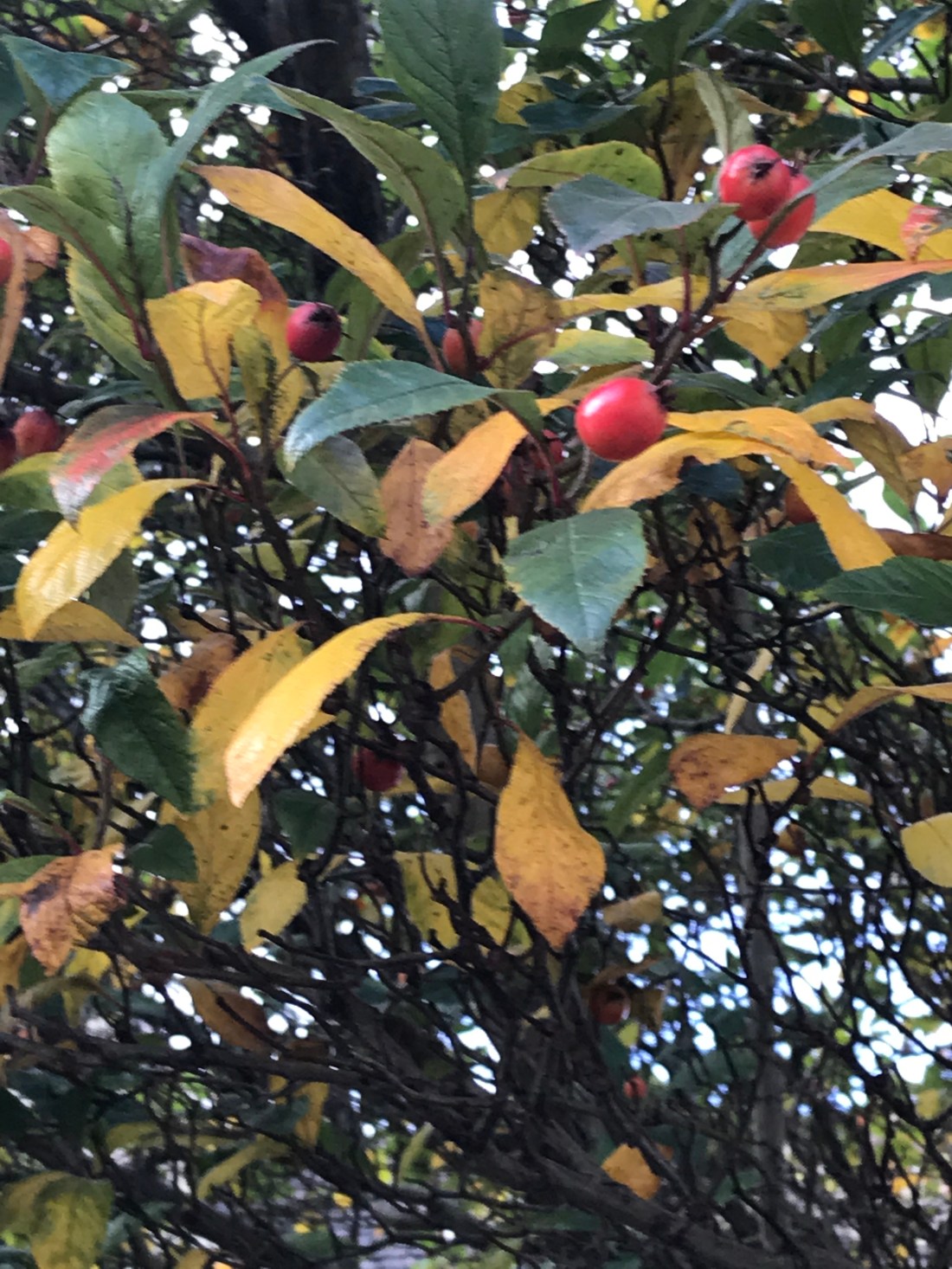
The scarlet hawthorn sits in the garden like the timpani of an orchestra. For much of the year, all the action, all the noise and excitement seems to be provided by showier plants – floriferous roses, or the herbaceous perennials which rise from nothing to fill the garden with colour and scent throughout summer. But, just as the garden is exhausted and it is time to cut the other plants down to their crowns, or to prune the roses severely, there is the scarlet hawthorn in its autumn dress, all flaming gold and abundant large red berries. There are few more pleasing sights on a bright, frosty day with the low sun illuminating the tree’s crown. On a dull, overcast or rainy day, the scarlet hawthorn and other deciduous heroes seem to be the only sources of colour and light to lift the spirits.
Crataegus coccinea is a useful tree in the garden. It is genuinely small, as opposed to being small for the first ten years before turning into a monster like so many other ‘small trees’ of the catalogues. When mature, it reaches 7.5m/25 feet tall and, in truth, it is its round-headed nature which is more likely to cause a problem in a city garden as it will grow as broad as it does tall. I enjoy plants which give and give again at different times of year; the scarlet hawthorn is generous. In spring it is covered with white, slightly sour-scented blossom which is loved by the insect pollinators. In summer, it settles down to a reliable green – the sort of background noise in a garden which is only noticed when it is absent. In autumn, the leaves turn gold before they fall. I believe that in their native New England, the deeper cold turns the leaves to red and even to purple. The berries are a valuable food for birds, birds which may have nested in its crown, protected by its 5cm/2″ thorns. Even in winter, the scarlet haw continues to give, to us and to other creatures. I find the fissured bark visually pleasing. Ladybirds and other hibernating insects find it homely, which in turn brings tits and numerous insectivorous birds in search of a meal. I have spent many a happy coffee time, wrapped against the cold, watching the sharp-eyed birds flitting from twig to twig, picking the crevices for food. Like other hawthorns, the bark of the previous year’s growth ripens through the cold months, gaining a deep red lustre. Slowly, in the cold chemistry of the tree’s stored energy, the buds ripen and swell with the promise of life. These changes, expressed by the tree, are fundamental to the timbre of the garden as a living space as, indeed, are its movements, and the movements of the creatures which are drawn to it.
When first I encountered Crataegus coccinea, it was by a different name, C. pedicellata. The two former species have been shown to be one species. Coccinea, being the older name, takes precedence. It is a more accurate description of the plant, and I should be less reluctant about this change than I am.


That is a good way of putting it. Hawthorns are very uncommon here, just because they are not consistent with the common landscape style. California landscapes tend to prefer flashier bloom, without so much concern for autumn color of winter fruit. There are a few trees at a commercial building in town. I so want to take the berries from them, but they are too pretty for everyone else. Rowans are even more rare!
LikeLike